How I Turn “Worthless” Options Into Lottery Tickets That Actually Win

Look, here’s what Wall Street doesn’t want you to know.
They say short-dated options “lottery tickets” like it’s supposed to scare you. Like it’s some dirty secret that ruins careers and empties accounts.
But here’s the thing – I’ve been treating certain options exactly like lottos for years. And it’s made me more money than my entire construction career ever did.
The difference? I know which tickets to buy – and they all cost under $2.
The B. Riley Trade That Changed Everything
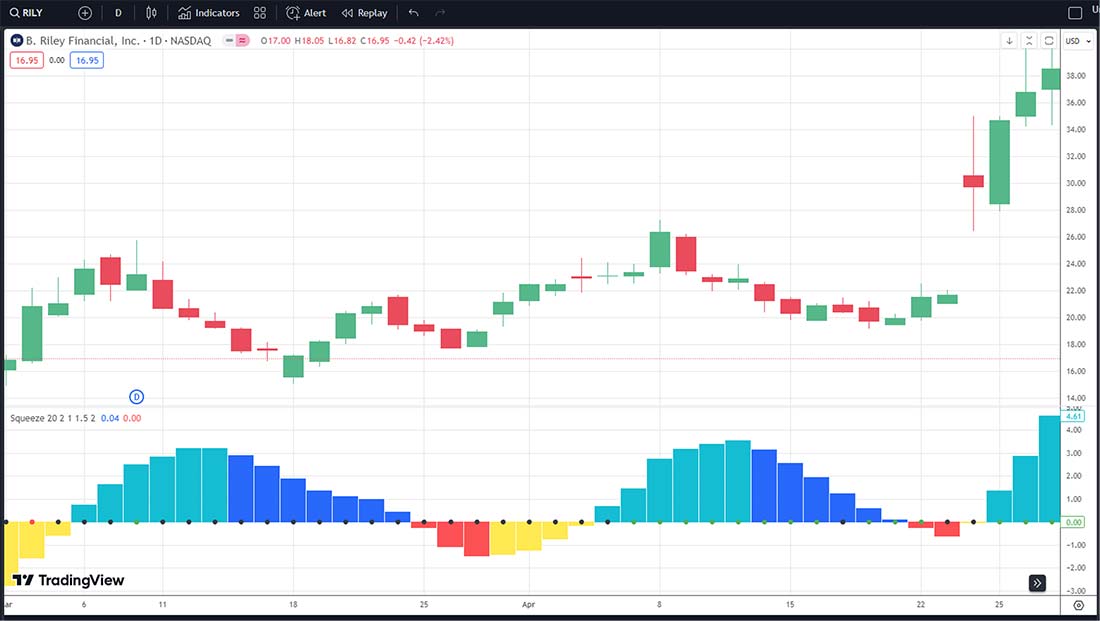
Back in April, B. Riley Financial was trading around $22, and Wall Street had completely written it off.
Short interest was sitting at 75% – three out of every four shares were borrowed and sold by traders betting against the company.
Fraud accusations were flying. The stock had been in free fall for months.
Most traders saw a company circling the drain. I saw lotto tickets trading for $0.65.
I bought the April 26th $22 calls for $0.65 each when RILY was trading right at $22. Total risk: under $0.65 in options premium. Maximum upside: unlimited.
According to the Black-Scholes model, these options had maybe a 15-20% probability of finishing in the money. The model was pricing in smooth, predictable decay with constant volatility.
However, the model can’t price in positive catalysts.
Two days later, RILY released an audited report that cleared them of all fraud allegations. The stock didn’t move smoothly. It exploded.
Those $0.65 lotto play that the model said had low probability of success? They closed at $8.00.
That’s 1,129% in 48 hours from a trade that cost less than a trip to the grocery store.
Why Wall Street’s Pricing Models Are Fundamentally Broken
Here’s the secret Wall Street doesn’t want you to discover: most options are priced using the Black-Scholes model, and that model has fatal flaws for short-term trades under $2.
The Black-Scholes Blind Spots:
- It assumes smooth price movement: Stocks don’t decline gradually – they crash, gap, and explode in ways the model can’t predict
- It assumes constant volatility: In reality, volatility explodes during news events, earnings surprises, and sentiment reversals
- It can’t handle “fat tail” events: Those sudden massive moves that create 1,000%+ winners
This creates systematic mispricing in cheap, short-term options.
The RILY calls were trading for $0.65 because the model calculated low probability based on “normal” market behavior.
But when you have 75% short interest and fraud allegations hanging over a stock, you’re not in “normal” territory.
You’re in explosive reversal territory – exactly where cheap options become lotto winners.
The Squeeze Multiplier That Breaks Everything
But mispriced options are just the foundation. The real magic happens when you combine them with squeeze dynamics – and this is where my Trend Pattern Squeeze (TPS) system gives me the edge.
The TPS identifies three critical elements:
Trend: The stock should be clearly trending either up or down – so obvious you can see it within 3 seconds of looking at the chart.
Pattern: Look for consolidation patterns like bull flags (in uptrends) or bear flags (in downtrends). These are periods where the stock rests near highs or lows, building energy for the next move.
Squeeze: When the squeeze indicator dots turn red, it signals consolidation and potential for explosive movement – like a compressed spring ready to release.
When the TPS fires AND you have other explosive dynamics, that’s when ordinary setups become extraordinary:
Short Squeeze Pressure: With 75% of RILY’s shares sold short, any positive news forces massive buying pressure as short sellers scramble to cover their positions.
Gamma Squeeze Acceleration: As the stock price rises, market makers who sold those cheap calls have to buy shares to hedge their positions. This buying pressure pushes the stock higher, forcing them to buy even MORE shares.
It’s a feedback loop that turns 20% stock moves into 1,000% option explosions.
When RILY’s fraud allegations got cleared, both dynamics hit simultaneously:
- Short sellers rushing to cover 75% of the float
- Market makers buying shares to hedge their gamma exposure
- All while the TPS had identified the perfect technical setup
- And I held lottos that cost $0.65
The result? 1,129% in 48 hours because reality shattered the model’s assumptions.
The TPS doesn’t just find random opportunities – it identifies the setups where technical pressure, squeeze dynamics, and timing all converge for maximum explosive potential.
Since March 2023, I’ve closed over 150 winners of at least 100% returns using this exact approach.
That’s not luck. That’s systematically exploiting Wall Street’s pricing failures combined with squeeze dynamics they can’t properly calculate.
The Perfect Storm Is Happening Right Now
Goldman Sachs recently reported that their Speculative Trading Indicator stands at its highest level since the 2020-2021 meme stock craze.
Remember that period?
Everyday Americans turned small amounts into life-changing money – 1,000%, 5,000%, even 10,000% gains.
The same explosive environment is happening RIGHT NOW.
And under-$2 lotto trades are perfectly designed to capitalize because we’re hunting the exact mispricing and squeeze setups that create these massive moves.
More from Trade of the Day

Gold Just Went on Sale – But the Reason Won’t Last
Jul 17, 2026
The Market Feels Different. Here’s What To Watch.
Jul 16, 2026

Saddle Up Sally! The Hottest Trend in Retail
Jul 15, 2026