Oil Just Had Its Biggest Drop Since 2020. The Strait Is Still Closed.

There is an old saying in the commodities market.
The cure for high prices is high prices.
Right now, oil is proving it in real time.
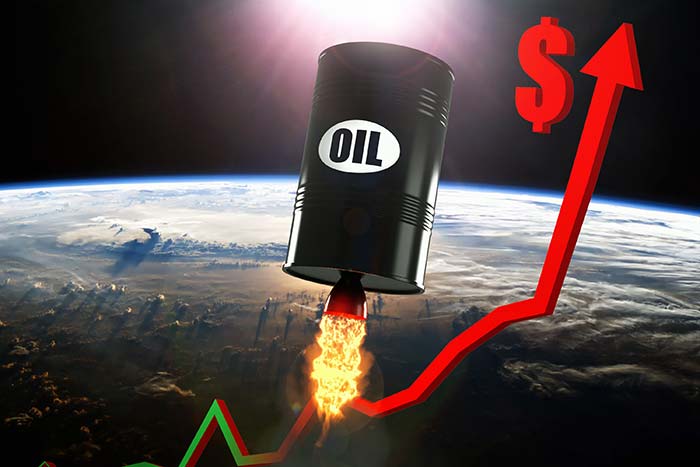
The Strait of Hormuz has been effectively closed since late February. Twenty percent of the world’s seaborne oil flows through that chokepoint. When Iran blocked it, prices spiked, and oil hit $117 last week.
Then Trump announced a two-week ceasefire. Oil plunged 16% in a single session, its biggest one-day drop since the pandemic.
The market exhaled too soon.
By Thursday morning, fewer than a half-dozen ships had been observed transiting the strait. Iran accused the U.S. of violating the deal.
The CEO of Abu Dhabi National Oil Company posted publicly that the Strait is not open.
Iran is now demanding tolls from ships that want to pass. WTI rebounded more than 6% back toward $100 in a single session.
The ceasefire is a two-week pause, not a resolution. The underlying disagreements have not moved.
The Strait is not open.
And the oil is still sitting in tankers going nowhere.
That is the setup I’ve been watching.
OPEC announced a production increase of 206,000 barrels per day in April. Rystad Energy called it a rounding error against a 17.8 million-barrel-per-day deficit. The oil is being produced.
It physically cannot reach the market.
Meanwhile, demand destruction is already underway. Countries that depend on imported oil are rationing. Industries that can substitute are substituting.
Airlines are cutting routes. Before this war started, oil traded around $70. The damage to demand does not undo itself the moment a ship clears the strait.

YOUR ACTION PLAN
Here’s what most people are not thinking about. The IEA projects an oversupply of nearly 4 million barrels per day in 2026 once the disruptions end. OPEC producers have a documented history of cranking up production when prices are high and flooding the market.
They are doing it right now.
The oil is building up. When the strait finally opens, it will not be a trickle.
That is the trade. Not what oil does today while negotiations drag on. It is positioning for the moment that trapped supply hits a market where demand has already started to permanently adjust.
A flood is coming.
 |
FUN FACT FRIDAY
Since the Strait of Hormuz slammed shut in early March 2026, Gulf producers have been torching roughly $745 million to $1.1 billion in oil and gas revenue every single day – that’s like sinking a supertanker full of cash daily.
Over 5+ weeks, losses already top tens of billions (with some countries down 70-75%), spiking global prices, inflating costs everywhere, and risking a massive economic migraine if it drags on. One narrow choke point = worldwide wallet pain.