Retail’s Silver Lining Playbook: How to Profit in a Broken Sector

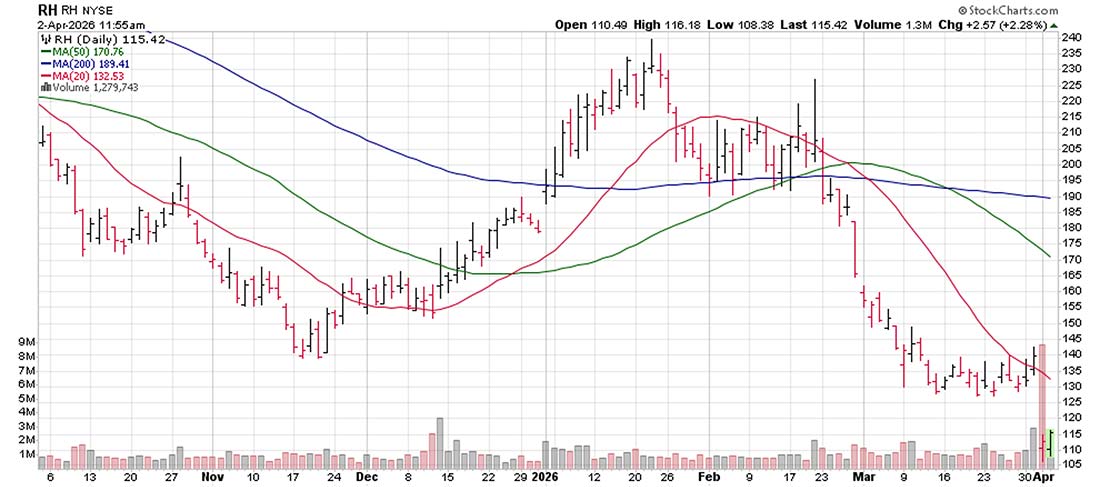
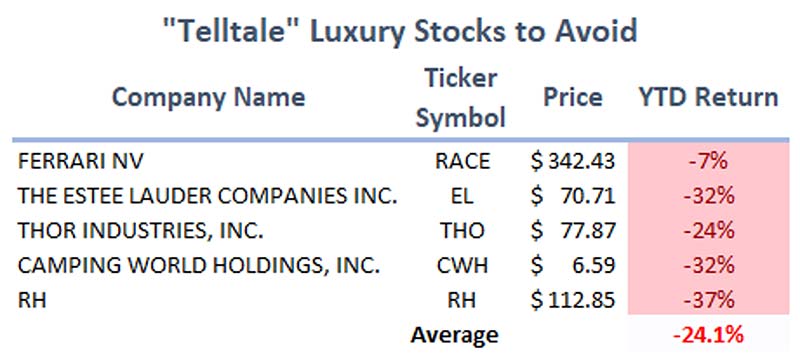
RH dropped earnings on Tuesday. The signal was clear: the wealthy have stopped shopping.
That matters more than it sounds. Higher-income consumers lead spending cycles in both directions. They spend early in expansions and pull back early when conditions tighten. When that group goes quiet, the rest of retail follows.
Now here is the thing about RH. If you ask me, I think the store is bougie and way overpriced. But that is exactly why its stock movement matters.
The RH customer base is not rate-sensitive in the traditional sense.
They are highly sensitive to wealth preservation. When that group pulls back, it is not reactive. It is proactive. And when the wealthy stop shopping early, what follows is not a blip. It is a cycle.
RH is not a broken company. It is a warning signal.
The Bad: Margin Pressure From Both Sides
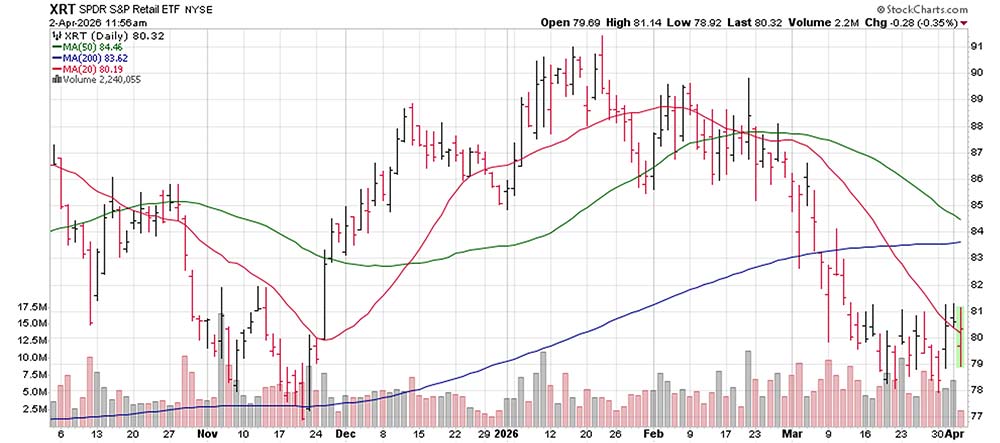
Retail is about to take a double hit.
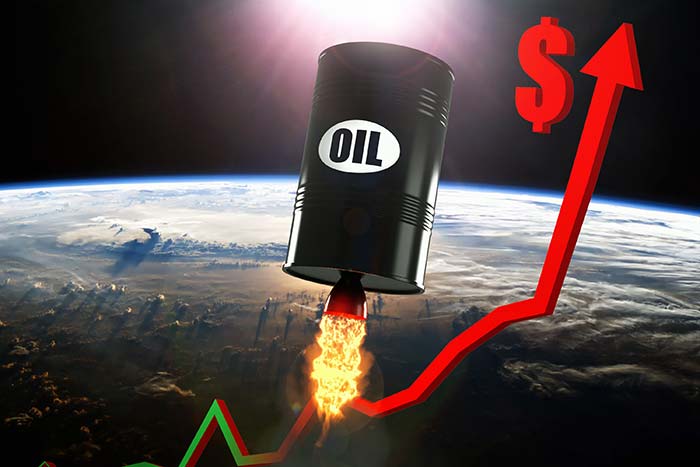
First, war inflation. Rising crude prices are working through the supply chain right now. Transportation, logistics, and distribution costs, meaning the cost to move products from where they are made to where you buy them, are all moving higher.
Those costs go directly to the shelf. Expect prices of everyday goods to rise through April.
Retailers with deep inventory may delay slightly, but the direction is clear.
Second is the structural reset in energy pricing. Crude may pull back on ceasefire headlines. Retail prices will not follow. Energy is establishing a new floor.
We saw this in 1973 during the oil embargo. Oil did not revert to prior levels. It set a new baseline. The same happened after the Iranian Revolution.
That dynamic is unfolding again.
Call it a geopolitical tax, meaning the permanent cost increase that war and instability bake into energy prices even after the conflict ends. It creates a persistent pricing headwind for the entire sector.
The Ugly: Demand Destruction
On the demand side, consumers are already shifting. Discretionary spending, meaning purchases on things you want but do not need, is being delayed or canceled. Appliances, electronics, furniture, and vehicles are the first to feel it.
Spending is moving toward essentials. Retailers in those categories are the most exposed.
These are not broken companies. They are simply exposed to the wrong side of the cycle.
The Good: Retail’s Silver Lining Stocks
This is not a sector to avoid entirely. It is a sector to pick your spots in.
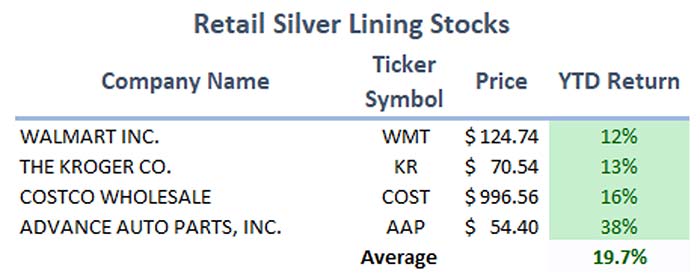
Four names stand out: Walmart, Kroger, Costco, and Advance Auto Parts.
Note the trend. These are companies that sell things people need, things that are on the weekly shopping list and part of day-to-day life. All three are among the largest operators in the country.
That means their logistics and warehousing game is strong, which means they see less of an impact on shelf prices from higher fuel costs. Are they insulated from higher oil? No.
But they have pricing power with suppliers, meaning the ability to push back on cost increases instead of passing them all to the customer. They absorb more of the hit before it reaches you.
Then there is Advance Auto Parts. I am sure that over the next six months, while I am taking my Walk Down Main Street, I will notice more cars being worked on in driveways around the neighborhood.
That is because you and I are going to start making the simple fixes on our cars instead of taking them to a service station. AAP benefits directly from that shift.
Pro Tip: Take more Walks down Main Street over the next few months. The weather is getting better and any shift in the economy is going to show up on your street before it shows up in the data. Take a notepad and pen. I am not kidding.

YOUR ACTION PLAN
The retail sector as a whole is entering a difficult stretch.
Rising input costs, a structural reset in energy prices, and weakening consumer demand create a challenging environment that is unlikely to resolve quickly.
This is not a short-term disruption. It is a transition into a new pricing and demand regime.
From a portfolio standpoint, broad exposure to retail should be approached cautiously over the next six to twelve months. But this is not a sector to ignore entirely.
The strategy is not to buy retail. It is to pick the right names within it. Avoid discretionary and luxury.
Focus on essential goods retailers and behavioral plays, such as auto parts.
Retail is among the first sectors to feel the effects of a new economic regime. And one of the last to recover. The silver lining is real. You just have to know where to look.
If you’d like to hear more of my insights, you can find them on our YouTube channel here.
More from Trade of the Day
The Overnight Earnings Strangle… JUST DO IT!
Apr 1, 2026

Warren Buffett Said It This Morning.
Mar 31, 2026
A Resource More Valuable Than Oil
Mar 30, 2026