Turn Market Chaos Into Your Greatest Opportunity Yet

Let’s clear something up right now…
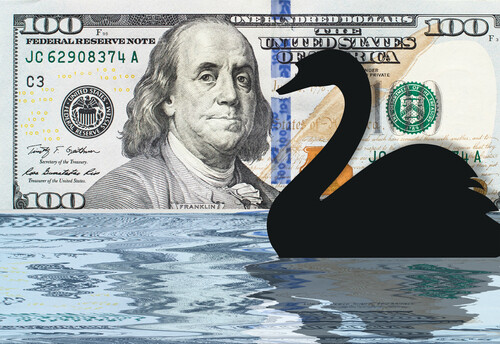
Not every market nosedive is a Black Swan.
Some selloffs are like sucker punches – unexpected gut-checks that leave traders reeling from Wall Street to Main Street.
Other market shocks?
They’re more like slow-motion train wrecks. You can spot them from a mile away – if you’re paying attention.
And you are paying attention. That’s why you’re here.
In today’s hyper-reactive markets – where tariffs are wielded like sledgehammers and every headline seems to send stocks into a tailspin – it’s critical to know the difference between a true Black Swan and a tradable, event-driven selloff.
The distinction couldn’t be more important.
One demands panic. The other? It begs for action – and, if you’re prepared, the right moves can lead to big-time profits.
The Abyss: A Black Swan’s True Nature
Let’s start with the real monster: the Black Swan.
Nassim Taleb coined the term to describe rare, unpredictable events with massive consequences – events we only rationalize in hindsight.
You know the type:
- 2008’s mortgage implosion.
- Lehman Brothers collapsing.
- COVID-19 sweeping the globe like a viral tsunami.
Here’s the thing about Black Swans: they don’t show up on radar.
Not because you aren’t looking, but because they thrive in the shadows of complacency. They’re fueled by hidden leverage – the accelerant that turns a spark into a five-alarm fire.
Take Long-Term Capital Management’s collapse in 1998. Few realized the hedge fund had $125 billion in assets and $1.25 trillion in derivatives exposure, leveraged to the brink. When it blew up, the Fed had to step in to prevent contagion from spiraling out of control.
That’s a textbook Black Swan: unseen leverage, systemic risk, and no safety net.
But what about today’s market shocks?
Event-Driven Selloffs: Loud, Messy, and Totally Tradable
Let’s talk about the selloffs we’re seeing right now.
Take President Trump’s latest tariff tantrum.
This isn’t a Black Swan. Not even close.
We’ve been warned about this for years. From the moment Trump descended that golden escalator, his protectionist policies have been a cornerstone of his platform.
So, when he slapped a 10% blanket tariff on trading partners – or announced the April 2, 2025 tariff volley that rattled markets from Shanghai to Stuttgart – it wasn’t a shock. It was the latest chapter in a very loud, very public story.
Even Roger Schlosstein, co-founder of BlackRock, nailed it:
“The two most recent periods of max uncertainty – the financial crisis and COVID – were caused by exogenous factors. In this case, the source of uncertainty is government action.”
Bingo.
The fire isn’t coming from some hidden systemic flaw. It’s coming from inside the house.
And that’s good news for traders and investors like us. Why? Because event-driven selloffs have a playbook.
Why Event-Driven Volatility Is Tradable
Unlike Black Swans, these selloffs aren’t random.
- Trade wars.
- Fed rate hikes.
- Debt ceiling standoffs.
- Brexit.
These are narrative-driven events. They have timelines. They have protagonists and antagonists. And – most importantly – they have off-ramps.
A government can reverse a policy. A president can delay tariffs. A central bank can cut rates.
These selloffs are messy, but they’re predictable. And when the smoke clears, they tend to bounce back hard.
Case in point: when Trump announced his “Liberation Day” tariffs, markets tanked. But when he walked some of them back, the Nasdaq rallied more than 12% in a single day.
That wasn’t luck.
That was the event-driven playbook in action.
How to Trade the Noise (And Come Out on Top)
Here’s your game plan for navigating this chaos:
1. Don’t Panic – Plan.
Black Swans demand defense. Event-driven selloffs demand offense. This is where you deploy, not retreat.
2. Watch the Narrative.
These markets are headline-driven. If tariffs are delayed, exemptions granted, or rhetoric softens, expect stocks to surge.
3. Buy the Dip – But Nibble, Don’t Gorge.
Use a one-third approach. Deploy one-third of your capital on strong names, keep two-thirds dry. If the market drops further, average down. If it rebounds, you’re already in the green.
4. Stick to Quality.
In chaos, capital seeks safety. Focus on mega-cap tech, dividend aristocrats, and companies with fortress balance sheets.
5. Watch for Hidden Leverage.
If an event-driven shock exposes systemic leverage – like hedge funds overexposed to China – be cautious. That’s when things flirt with Black Swan territory.
Volatility Is the New Normal – That’s Great for You
We’re in an era where policymakers are the disruptors. That’s unnerving for some, but for traders, it’s a goldmine of opportunity.
Here’s why:
- Politicians know how markets react to their moves. Heading into elections, you better believe they’ll soothe or goose markets when needed.
- Volatility isn’t just random anymore – it’s a policy tool.
And for us? That makes it a trading tool.
Unlike a true Black Swan, today’s turmoil is like a chess match with loud commentary. You know who’s playing. You know their moves. You just need the right playbook.

YOUR ACTION PLAN
What separates pros from amateurs in this market isn’t how much capital they throw around during volatility. It’s knowing the storm they’re in.
Black Swans? That’s survival mode. But these policy-driven selloffs? These are opportunities knocking – loudly – for traders who can tell the difference.
While others panic-sell at the bottom, you’ll be the one buying quality names at a discount. You’ll be the one riding the inevitable reversal when policy shifts.
This isn’t theory. It’s a battle-tested strategy that’s delivered triple-digit gains for my subscribers time and again.
So, next time the market convulses over another policy pronouncement, remember:
You’re not watching a Black Swan. You’re watching an opportunity unfold.
And now you have the playbook to profit.
Discover Trump’s “Master Plan” for the U.S. market.
 |
FUN FACT FRIDAY
Did you know that some of the most explosive weekly gains in the market have come during times of uncertainty and chaos?
Here are some of the biggest weekly gains for the S&P 500 over the last 30 years:
- March 2009: The market surged 10.7% in a single week as it began rebounding from the Great Financial Crisis – marking the start of the longest bull run in history.
- November 2008: Just months earlier, during the same crisis, the S&P 500 had a massive 12% weekly gain following government intervention to stabilize the economy.
- April 2020: Amid the COVID-19 pandemic, the S&P 500 soared 12.1% in one week after unprecedented stimulus measures calmed market fears.
And this week?
The Nasdaq just rallied +5%, powered by tech earnings and optimism about a potential easing of trade tensions.
What’s the takeaway? History shows that big weekly gains often follow major selloffs, proving that volatility creates opportunity for traders who stay in the game.
Markets may be unpredictable day-to-day, but resilience is a pattern you can count on.