The Chart Said It, The Insiders Confirmed It
When I wrote about Electronic Arts (EA) last Monday, I told you the chart was whispering.
The trend was exhausted. The pattern was a tight bearish consolidation. The squeeze was loading.
I said watch the $199 support level, because when that breaks, it breaks with conviction.
Now I want to add another layer… one most retail traders completely ignore.
The insiders.
What the Form 4s Are Telling Us
Let me explain something quick for anyone who’s new here.
When corporate executives (CEOs, CFOs, Presidents, Chief People Officers) buy or sell their own company’s stock, they’re required by law to report it to the SEC within two business days.
That filing is called a Form 4. It’s public. Anyone can read it on SEC.gov or on sites like OpenInsider or StockTitan for free.
This isn’t insider trading. This is legal insider activity. And it’s one of the most underused free tools available to retail traders.
Karim Rahemtulla is like a bloodhound when it comes to following insider activity. I’ve learned a lot from him, and you can too during tomorrow’s live event.
Here’s why it matters: these people know their business better than any analyst on Wall Street. When they’re buying, they’re telling you something. When they’re selling… they’re telling you something too.
So what are EA’s insiders doing right now?
Selling.
A Pattern You Can’t Ignore
Let me walk you through what’s been hitting the tape.
Laura Miele, President of EA Entertainment, sold 2,500 shares on May 15th at $200.54. Chief People Officer Vijayanthimala Singh sold 1,200 shares at $200.81, also in May. Chief Accounting Officer Eric Charles Kelly sold 3,000 shares at $200.83 on May 28th. CEO Andrew Wilson’s family trust sold 5,000 shares under a pre-arranged plan established back in August 2025.
That’s the CEO, the President, the Chief Accounting Officer, and the Chief People Officer… all selling in the same price range, all within weeks of each other, right after two consecutive earnings misses.
Now here’s the nuance I always teach people…
Every one of these sales was executed under a Rule 10b5-1 trading plan. These are pre-scheduled plans that insiders set up months in advance, specifically to avoid any appearance of trading on non-public information. Wilson’s plan was established August 1, 2025. Miele’s on August 8, 2025. Singh’s on May 28, 2025.
Does that make the selling less meaningful?
Partially. You can’t look at a 10b5-1 sale the same way you’d look at a spontaneous open-market dump. These were scheduled. That’s an important distinction.
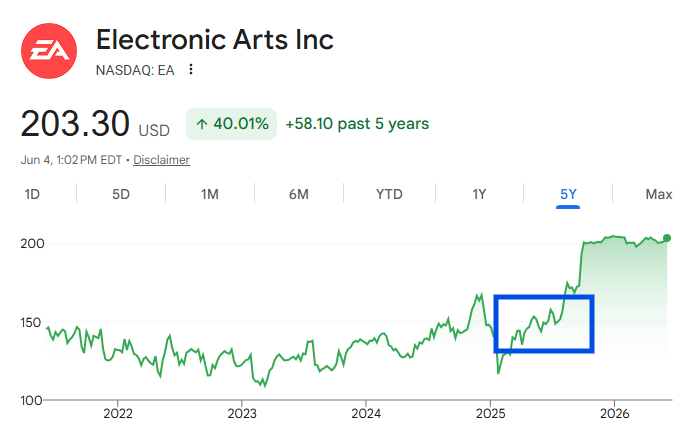
But here’s what I keep coming back to: these executives set up those plans in the summer of 2025, when the stock was trading in the $160s and $170s.
More from Wake-up Watchlist



Healthcare Is No Longer Dead Money.
Jul 23, 2026

3 Stocks At All-Time Highs Just Got Downgraded
Jul 22, 2026