The Buy Signal I Trust the Most

Back in the spring, Wall Street was busy writing software’s obituary.
They even gave it a name: The SaaSpocalypse.
AI was going to make every enterprise software company obsolete, and people sold like the buildings were on fire.
About $2 trillion went up in smoke in a matter of months. For the first time ever, software was trading at a discount to the S&P 500, with the sector’s multiple falling from 84x earnings at the peak to under 23x.
That is exactly the kind of moment I live for.
When a whole group of good companies gets thrown out with the trash, it gets infinitely more attractive to me.
It’s the same feeling I had when I was pounding the table on gold, silver, and the left-for-dead biotechs when nobody would touch them.
The crowd panics, the price falls below what the business is worth, and the people who keep their heads get paid for it later.
So in late March, and again in April, I told my War Room members what I was doing.
I was buying the names everyone else was running from. But here is the part that gave me the conviction to pull the trigger…
The people running these companies were buying too.
Why Insider Buying Is the Signal I Trust Most
Let me walk you through this, because most people have it backward.
Think about why an executive sells his own stock… A bigger house. A divorce. The tax man in April. His advisor telling him he’s too concentrated.
A sale tells you almost nothing, because there are a hundred reasons to sell.
But tell me the reasons a guy buys his own stock with his own money. Go ahead, I will wait…
There is only one: He thinks it’s going higher.
Nobody writes a personal check for $10 million in his own stock and hopes to lose money on it.
So picture this…
The stock has been cut by a third. Every headline says the business is dead. The whole crowd is shoving for the exit. And right there in the doorway, walking the other way, is the one person who knows the company better than anyone on Wall Street, writing a $10 million check to buy more.
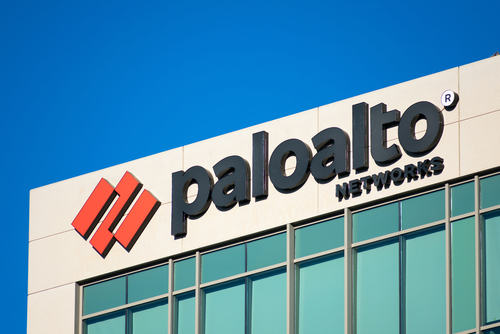
That is Palo Alto Networks (PANW).
The CEO, Nikesh Arora, bought about $10 million of his own stock in a single day, near the lows. His first open-market purchase in nearly seven years.
Seven years!
It bumped his personal stake by almost 25%. You don’t need an analyst report to translate that one.
Salesforce (CRM) told the same story, but in a slightly quieter voice.
The stock was down almost 30% on the year, and two directors bought into the gloom (one of them putting half a million dollars in at roughly $194 a share), while the company launched the biggest buyback in its history.
Do those look like people who think their own business is about to be wiped out?
Those are the folks who know the most… telling you that the selling went too far.
Look at What Happened Next
The panic burned itself out, the way it always does.
In May, the iShares Expanded Tech-Software Sector ETF (IGV) posted its best month since October 2001, rising 21%.
The group now sits about 35% above its April bottom.
But the index number undersells what these names did.
Palo Alto, where the CEO put his $10 million in around $147, now trades near $297. It’s roughly doubled, in two months, from the exact spot the boss was buying.
Microsoft (MSFT), down close to 20% on the year when I picked it up, is back near $450.
IBM got left for dead near $212 and has run back to about $320 and new highs.
Salesforce, the other name the insiders were buying, has lagged and still sits near $191.
People see a dud. I see the one still closest to where the smart money bought.
I’m not upset about owning it.

YOUR ACTION PLAN
Do not chase Palo Alto up here after a run like that.
The easy money is made, and buying a stock that has doubled because you just heard the story is how you give it all back.
The trade is not the point.
The lesson is (and it shows up in every panic), when a quality group gets dumped wholesale, don’t bother asking the crowd what they think, because the crowd is doing the dumping.
Find the companies where the people running them are spending their own money near the lows, and go in alongside them with a plan.
I size these to about 5% of the portfolio, set a 25% stop loss from my cost, and only get out on bad news about the company itself.
Not because the market threw a tantrum on a TACO Tuesday.
That is how you turn a scary headline into the best buying opportunity of the year.
The crowd sells the fear. The smart money buys the value.
This is the work we do every day in the War Room.
When I bought these names in March, my members didn’t find out weeks later in a recap. They saw it the second I did it, reasoning and all, in real time.
There’s always another panic coming, another good group tossed out with the garbage.
When the next one hits, you want to be in the War Room buying it, not at home reading the obituaries.
I’ve got a detailed insider trading idea in the works, and it drives home the importance of following the smart money.
Stay tuned for more on that.
More from Trade of the Day

Gold Just Went on Sale – But the Reason Won’t Last
Jul 17, 2026
The Market Feels Different. Here’s What To Watch.
Jul 16, 2026
Saddle Up Sally! The Hottest Trend in Retail
Jul 15, 2026