The Bizarre Concept of Peace in America

Publisher’s Note: For this issue, we thought it would be fun to go on a journey back in time. Below is a copy of an article Karim Rahemtulla wrote back in June of 1999 when he was the Investment Director of the Oxford Club.
If you had listened to Karim back then and held onto Lockheed Martin (LMT)… you’d be up 1,428%!
Below you’ll find the unaltered editorial that our friends at The Oxford Club uncovered from their vault (minus some notes from me that I highlighted in yellow).

Enjoy this blast from the past…
The Bizarre Concept of Peace in America
And How to Profit from It
By Karim Rahemtulla
June 1, 1999 (The Oxford Club Communique, Volume 12 No. 10)
|
|

For a nation that has been officially at peace for over 50 years, the U.S. has certainly fought many wars. Korea. Vietnam. Panama. Grenada. The Persian Gulf. And it doesn’t look like we’re going to stop any time soon.
Most of the bombs that NATO is raining down on Milosevic and his minions come courtesy of the United States. Missiles, smart bombs, Apache helicopters, jet fighters: you name it, we build it.
Of course, we’re paying for it, too. Most Americans support a healthy military, but the cost of maintaining a first-rate force can be astronomical. And the frustration mounts when it becomes clear that a good portion of the budget has been misspent. But that’s about to change.
The conflict in Kosovo tells us a few things about our military. First, that the high-tech wizardry we first saw in the Gulf War is still devastatingly effective. But more disturbing is the fact that our armed forces – for all their expense – are not as well-supplied as we had expected. That bodes well for companies entrenched in the military industrial complex – and for investors who are willing to buck typical Wall Street babble and see what’s really going on.
For instance, the Pentagon recently announced that it would take weeks, thousands of man-hours and millions of dollars to get the much-vaunted Apache helicopters ready for combat. How is it possible that they cannot be deployed at once? Obviously, someone has been asleep at the wheel.
Of course, a true crisis in military readiness will not necessarily spur our current cadre of Washington power-mongers to action. Fortunately, two things that politicians do listen to – media criticism and public outrage – have finally caught on. CBS’s Sixty Minutes recently exposed the low pay and horrible living conditions that are forcing thousands of our best soldiers out of the military. And a May 17 editorial in the Wall Street Journal revealed that U.S. Defense spending as a percentage of GDP is at its lowest level since the days before Pearl Harbor.
That might be acceptable in an era of across-the-board fiscal responsibility, but not while pork barrel bonanzas are still such a huge part of federal culture, or while the money is simply being diverted to “more essential” public goods and social experiments. The American people will stand for a surprising amount of abuse from politicians, but they will not allow our military men and women to be put in harm’s way without the best equipment the world has to offer. Jimmy Carter tried it, and he didn’t even make a second term.
For a former peacenik, Bill Clinton certainly has shown a willingness to use muscle when he wants to. We are still bombing Iraq. Remember Somalia? What about Haiti? If our president wants to keep on being the policeman of the world, he’s going to have to pay the piper. And he knows it. Note the frantic request for an additional $6 billion to carry out the raids in Kosovo. In the next decade, the Defense Department will spend untold ADDITIONAL billions to beef up and update the U.S. military. That money will flow to a select few contractors.
That’s why we are going to buy Lockheed Martin (LMT) one of the largest defense contractors in the world.
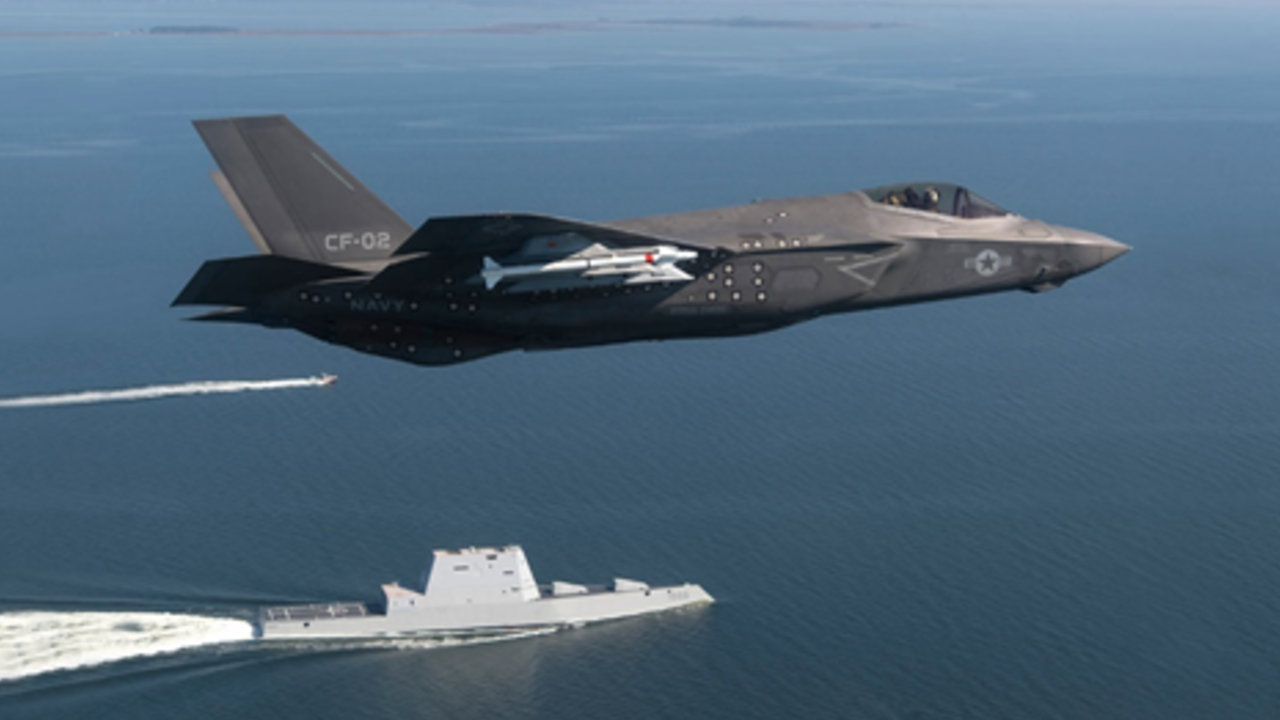
Why Lockheed? First of all, because it’s the real deal. Lockheed produces some of the “big ticket” items made famous during Desert Storm. The F-16, the F-117 stealth fighter, and the advanced F-22 are all company creations. But that’s not all. Lockheed also produces more pedestrian warbirds like the huge C-130J Hercules transport, high-tech space rockets like the Titan II and IV, and all the electronic and computer equipment that goes along with them.
Peace Breeds Contempt: Prosperous Countries Are on the Verge of Re-Arming
What makes Lockheed such a great company right now is that all these space-age gadgets will be in increasing demand over the next few years. Most people aren’t aware of it, but U.S. arms suppliers sell to folks other than Uncle Sam. Lockheed is no exception. The recent global economic crisis crushed international orders and put the company against the wall. But times are changing. The crisis is over. And the orders are rolling in. Lockheed makes the best, and governments who can afford it are willing to pay top dollar.
For instance, Greek officials just announced that their government will purchase 50 more F-16s. That’s in addition to 80 already on order. The multibillion-dollar bonanza is just the beginning of a slew of new orders this company will get as more countries realize that it’s time to beef up. The U.S. isn’t the only country interested in re-arming.
Why Wall Street Doesn’t Get It
None of these windfalls would matter to us if Wall Street analysts knew what was going on. They would be in the stock already, sending it sky high. So why aren’t they? Because they just don’t understand Lockheed.
The real story starts a couple of years back. Lockheed was in a losing battle with Boeing and Airbus for a stake in the commercial airliner industry. Boeing is just too big, and Airbus is heavily subsidized. The division was a money-loser from day one. But Lockheed did the right thing – the company cut its losses and ducked out of the commercial division to concentrate on what it does best.
Wall Street hasn’t yet come to terms with the leaner, meaner Lockheed. Like always, the analysts are looking in the rearview mirror. All they see is the failure of the airliner experiment followed by a few years of slow orders. But they’re wrong.
My sources tell me that the company is inundated with bids. The crisis in Kosovo is going to be the spark that lights up the entire industry.
Over the next three to five years, Lockheed should grow its bottom line by between 10% and 15% year over year. Earnings per share should approach US$3.30 in 1999, US$3.60 in 2000.
Just using the 1999 numbers, the shares are trading at a low price/earnings ratio of about 13. That number does not reflect the recent rise in orders, or does it factor in the effects of the crisis in Kosovo.
As an added bonus, you will also be paid a nice 2% plus annual dividend. That’s well above average in this interest-rate environment.
More Than War: Lockheed’s Exposure to Even More High-Tech Industries
Lockheed is more than just a defense contractor. The company also gets you involved in other high-growth technologies, like communications and satellites. Every new cell phones, GPS system and dish-based entertainment venture uses the new systems. Better yet, the business is still in its infancy. Buy Lockheed now to get in early.
Of course, every new industry has its glitches. And that’s where the opportunity lies. Over the past few months, the Air Force has lost several new satellites due to launch problems with Lockheed rockets. But no one is giving up on the new systems. As soon as they iron out a few of the inevitable glitches, this industry will take off like a… well, you get the picture.
Not surprisingly, Wall Street once again refuses to look past this. The rocket mishaps are one of the main reasons the shares are down 30% from their highs. But the shares are now showing signs of recovery up from their January lows of $35 to their current price around $40.
Publisher’s note: These are prices from when Karim’s article was published in June 1999]. Remember, NASA, the Air Force, and the exploding private satellite industry all need Lockheed’s efforts. Their new technologies won’t work until Lockheed’s do.
The time to buy is now, while the perception clouds the reality. Don’t hesitate.
More from Trade of the Day

Gold Just Went on Sale – But the Reason Won’t Last
Jul 17, 2026

The Market Feels Different. Here’s What To Watch.
Jul 16, 2026

Saddle Up Sally! The Hottest Trend in Retail
Jul 15, 2026